
The solutions to climate change problems are contingent on how society and economy are organized and how they evolve. SC3 research center focuses on the driving forces, the agents of change: the behavior of households and businesses. We combine insights and methods from social sciences – economics, psychology, sociology, geography – with computational models of societies to explore effects of climate change adaptation and mitigation policies.
We focus on economy as part of a complex adaptive socio-environmental system where heterogeneous agents interact, learn and adapt in an evolutionary manner, giving rise to macrophenomena and emergent properties at societal level. Our team has been working on both climate change adaptation and mitigation over the years, though most of our current projects focus on climate-induced risks and adaptation to them.

The center is made of its people, an enthusiastic and growing team, with each person working on a different aspect of the social complexity of climate change
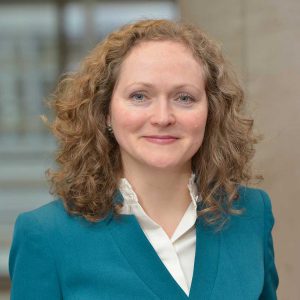
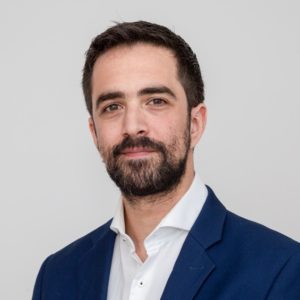
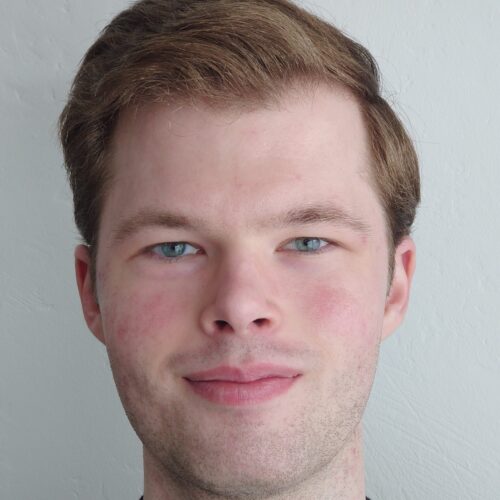
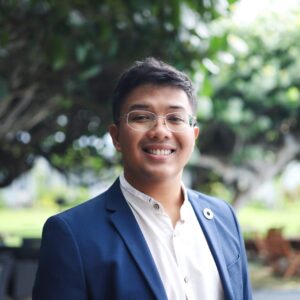
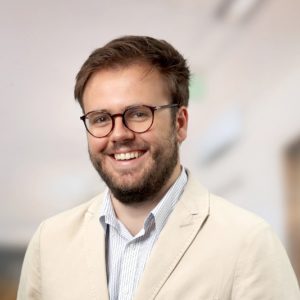
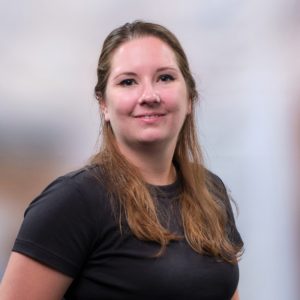
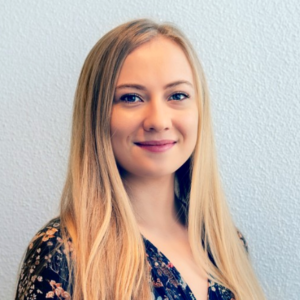
Working with students and postdoctoral researchers has been always rewarding! The Center is proud of the achievements of its alumni.
Alessandro’s PhD research focused on exploring how (coastal) regional economies cope with increasing climate risks. As part of the ERC SCALAR project, he developed an agent-based model grounded in New Economic Geography to explore how households and firms mutually relocate and make economic decisions under risk of flooding. Alessandro actively used household survey data to empirically ground agents risk perceptions and private climate change adaptation decisions, and collaborated with the rest of the SC3 Team to couple agent-based with computable general equilibrium models. Alessandro joined the IIASA Young Scientists Summer Program. He is currently a PostDoc Researcher at the RFF-CMCC European Institute on Economics and the Environment, Milan, Italy.
Leila’s PhD research focused on behavioral climate change mitigation. She developed households surveys and applied agent-based modeling to explore to what extent changes in individual behavior (investments in low carbon technologies, energy-use habits, switching among energy providers) amplified by social interactions matter for low-carbon economy transitions. Leila joined the IIASA Young Scientists Summer Program and has been active in the science-policy interface. She is currently a Senior research scholar in the IIASA Energy, Climate, and Environment (ECE) Program, in Laxenburg, Austria.
During his Post-Doctoral research Ju-Sung was the leading researcher on the multinational project funded within the ‘Digging Into Data‘ initiative. He applies advanced statistical techniques and social network analysis on the data for and from social simulations. Ju-Sung is currently an Assistant Professor at the Department of Media and Communication, Erasmus University Rotterdam, in Rotterdam, the Netherlands .
Koen’s PhD thesis focused on developing theory- and data-grounded computational models of human behavior to study economic and social consequences of climate change in flood-prone urban areas. He developed further the RHEA agent-based housing market model and run surveys to study how households risk perceptions and socio-economic heterogeneity lead to changes in prices and outmigration as hazard probabilities change. Koen contributes to the KNAW Blog ‘Faces of Science’ and is currently an Assistant Professor at the Environmental Systems Analysis Group, WUR, in Wageningen, the Netherlands.
Shaheen did her PhD at the interface between spatial agent-based modelling (ABM) and Machine Learning (ML), exploring how ML can enhance agents’ decision in ABMs under conditions of risk and uncertainty. She explored the impacts of various learning algorithms used to amplify social, spatial and institutional intelligence performed either on individual or group level. Shaheen is currently an Assistant Professor at the Department of Computer Science, University of Duhok, Duhok, Iraq.
Brayton’s PhD research focused on understanding how people across the world perceive and act upon climate-induced risks. As part of the ERC SCALAR project, he developed a series of households’ surveys conducted longitudinally across fours countries to elicit individual socio-behavioral factors that affect private climate adaptation decisions. Besides the statistical analysis of this longitudinal data, Brayton also collaborated with the rest of the SC3 Team to design empirically grounded agent-based models using theories from environmental psychology and this unique survey data. During his PhD, Brayton was awarded the DANS scholarship for the Summer Program in Quantitative Methods of Social Research, the Clifford C. Clogg Scholarship for the Summer Program in Quantitative Methods of Social Research and the Van der Gaag Grant from The Royal Netherlands Academy of Arts and Sciences. He is currently the Lead Data Scientist, Barcelona, Spain.
During her Honours BSc Technology and Liberal Arts & Sciences with us Hannah explored methodological challenges of integrating behavioral theories and data with computational social models. She is interested in interdisciplinary research on social dynamics specifically in the domain of education, and next to classic statistics methods – in social networks and agent-based simulation. She received her MSc Statistics from ETH in 2019 and worked as a Scientific Assistant at the Social Networks Lab, ETH, in Zurich, Switzerland until March 2020.
In her PhD thesis Kamia explored a triple nexus of electrification, climate change mitigation and adaptation for the electricity sector on the Global South. She applied a country-level sectoral model to estimate cost-effective mitigation transition pathways while considering its vulnerabilities to climate change. Kamia actively bridges science and policy by carrying out Semi-Structured Interviews and Focus Group Discussions to get insights into the adaptation actions in practice, serving in the Expert Panel at the UN COP24, writing for the Jakarta Post and featured as one of Southeast Asian Women Leaders. She is currently a Climate Change Policy advisor at PLN, the National Electricity Company in Indonesia.
Rianne studied the regional-level impacts of individual farmers adaptation to droughts during her PhD project. She carried out a survey among Dutch farmers exploring their perceptions of drought risks, the role of social networks, and individual adaptation decisions. Rianne has also developed an agent-based economic model to study dynamics of regional agricultural income when boundedly rational farmers take adaptation decisions under uncertainty. Currently Rianne is an Environmental Economist at ACTeon, in Colmar, France.
Saman’s PhD was on tracing the dynamics of urban disaster resilience by means of remote sensing and agent-based modelling. In this collaborative project led by Prof Norman Kerle , Saman applied an agent-based model to explore how households in both formal and informal sector recover after a hazard on the case of 2013 typhoon Haiyan, in the Philippines. Saman is currently Associate Professor, University College London, UK.
.